Top Poker Sites
 Best Online Sports Betting Sites
 Claim the Best Online Gambling Bonuses
 The Best Slots Games to Play Online
 Reviews of Online Gambling Sites






Affiliate Disclosure: Some links on Gambling Nerd are affiliate links. If you use them to sign up or deposit, we may earn a commission at no extra cost to you. These rewards help fund new guides, but they never influence our verdicts. Our recommendations are based on independent research and our own ranking system.
Tracking blacklisted online casinos has been a focus of GamblingNerd for a long time. We previously maintained a database of over 200 blacklisted casino sites, but when we revisited it, we found that most were no longer in business. This prompted us to reinvestigate the sites that remain active.
Our blacklist now includes just 10 active casinos. In this guide, we break down why each casino is still on the list, what evidence we found, how we did our research, and the red flags you should look for before making a deposit.
Nerd Picks of the Month



-

-

-

-
+7 more



-
-
-
-
+9 more




-
-
-
-
+9 more





-
-
-
-
+8 more



-
-
-
-
+9 more
What Do We Consider a Blacklisted Online Casino?
We blacklist an online casino once we find enough evidence that playing there poses a significant risk to players. We don’t automatically blacklist a casino simply because it operates offshore, has received complaints, or lacks a verifiable license.
Those factors can contribute to our decision, but we dig deep into a site’s history and operations. An unlicensed casino with a long history of payment complaints presents a different risk than a licensed casino with a handful of customer service complaints.
Resolved complaints also remain relevant. Resolving issues is great, but it doesn’t erase the original problem. If dozens or hundreds of players report similar withdrawal issues, that pattern is notable even when most of those complaints are resolved.
Blacklisted Online Casinos and the Evidence
We’ve checked every casino on our current blacklist, and each meets at least some criteria such as unresolved non-payment issues, questionable licenses, regulator actions, manipulated games and more.
Last researched/updated: October 2026
| Casino | License1 of 3 | Main Documented Issues2 of 3 | Notes3 of 3 |
|---|---|---|---|
| BetVoyager | Unrecognized/questionable license | Payment complaints, licensing concerns | BetVoyager is licensed by the Global Financial Services Commission, a non-governmental regulatory organization. Its complaint history includes recurring payment issues. |
| bwin | Kahnawàke Gaming Commission | Unresolved payment and account disputes | Numerous unresolved complaints involving withdrawals, account closures, and withheld player funds, including high-value disputes. |
| Casino-X | Curaçao Gaming Authority | Withdrawal delays, disputed/confiscated balances | Multiple unresolved complaints over withdrawals and balances, including substantial five-figure disputes. |
| Palace of Chance | Unlicensed | Recurring withdrawal delays | Its claimed Anjouan license does not exist. It also has an extensive history of complaints dominated by payment and withdrawal issues. |
| Prism Casino | Unlicensed | Long-running pattern of delayed payments | Its claimed Anjouan license does not exist. AskGamblers has handled more than 160 complaints involving Prism, overwhelmingly involving payments. |
| Royal Ace | Unlicensed | Delayed and declined withdrawals | Its claimed Anjouan licence does not exist. Complaint databases also show hundreds of complaints and recurring withdrawal disputes. |
| Bella Vegas | Kahnawàke Gaming Commission | Withdrawal/payment disputes | Complaint records include unresolved payment disputes. Its operator has also faced US regulatory action. |
| Jupiter Club | Kahnawàke Gaming Commission | Withdrawal disputes | The site has unresolved withdrawal issues, and its parent company has faced US regulatory action. |
| Casino Grand Bay | Kahnawàke Gaming Commission | Delayed payouts and disputed balances | Historical and recent complaints show a recurring pattern of withdrawal and payment problems. Its parent company has faced regulatory action in the US. |
| Lake Palace | Kahnawàke Gaming Commission | Withdrawal concerns, operator-group risk | Payment issues and regulatory action involving its operator contributed to its inclusion. |
Online Casino Blacklist: Our Findings
Our biggest finding wasn’t how many casinos we added to the blacklist. It was how many had disappeared.
GamblingNerd’s previous blacklist contained more than 200 casinos. Most are no longer operating. Ultimately, we cut our list down to 10.
Payment and withdrawal problems were easily the most common concern.

Prism is one of the clearest examples. AskGamblers has handled more than 160 casino-related complaints, with payment disputes accounting for the overwhelming majority. While many were eventually resolved, some were not. The volume of payment complaints highlights a pattern that we can’t ignore.
Licensing was another major factor. Palace of Chance, Prism Casino, and Royal Ace claim Anjouan licensing in their terms, but those licenses don’t exist. BetVoyager presents a different licensing concern. It holds one from the Global Financial Services Commission. However, that organization describes itself as nongovernmental, and we don’t consider it equivalent to a license from a recognized government gambling regulator.
Not every casino on the blacklist is unlicensed. Bwin and several casinos operated by TD Investments Ltd. are licensed by the Kahnawàke Gaming Commission. Licensing doesn’t guarantee legitimacy.
Most Common Problems We Found
Withdrawal and payment problems appeared more consistently than any other issue. Customer service issues and unresolved player complaints were also common. Here’s a breakdown of the most common problems we found among casinos we blacklisted.
| Withdrawal/payment problems | 10 |
| Customer service/communication issues | 6 |
| Unresolved player disputes | 6 |
| Licensing concerns | 4 |
| Account/balance disputes | 3 |
| Regulatory action involving operator | 3 |
Evidence That Can Put a Casino on the Blacklist
We consider several factors when deciding whether to add a casino to our blacklist.

Unresolved non-payment issues
This is one of the top reasons we blacklist a casino. A casino that doesn’t pay its players is usually just a step or two away from shutting down and stealing player balances.

False or unverifiable licensing
We check all licensing claims and verify any listed licenses. If they have a false license, or we can’t verify it with the regulator, they may go on the blacklist.

Regulator action
We check whether a site has had its license suspended or revoked, and whether regulators have imposed any significant fines.

Confiscating Legitimate Balances
Some rogue casinos confiscate legitimate player balances as a non-payment tactic, which will likely get a casino blacklisted.

Manipulated or pirated games
If we find legitimate evidence that a casino uses pirated games or manipulates game outputs, we add it to our blacklist.
Serious misleading terms or practices
We review a casino’s terms and player feedback for predatory terms or practices that make it hard for players to cash out.

Persistent failures to resolve legitimate complaints
If a casino doesn’t answer player complaints, it likely has other issues, including non-payment. If they aren’t willing to serve their players, we won’t endorse them.
These checks complement our ranking methodology for gambling sites, where we evaluate safety, payments, reputation, and the overall player experience.
How We Found and Checked Blacklisted Sites
We didn’t simply copy GamblingNerd’s previous blacklist. We checked which casinos were still operating and re-investigated the survivors using a process consistent with our gambling-site ranking methodology.
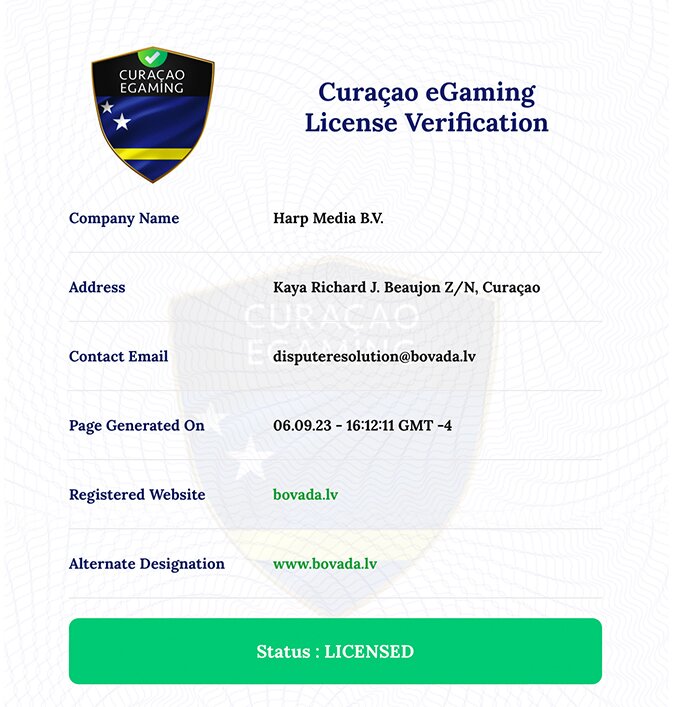
We Verified License Claims
We looked for specific licensing information and, where possible, checked regulator databases.
A casino claiming to have a license isn’t enough. When a casino claims a specific license, we verify the casino or operator through the relevant regulator. If we cannot verify that licensing relationship, we classify the casino as unlicensed.
That is why we classify Palace of Chance, Prism, and Royal Ace as unlicensed despite their claims of Anjouan licensing.

We Investigated Complaint Patterns
We reviewed complaint databases and player reports from sources including AskGamblers, Casino Guru, and Trustpilot.
We looked for patterns of behavior. One delayed withdrawal doesn’t prove a casino routinely delays payments. Dozens or hundreds of similar reports are a pattern that we don’t ignore.
We don’t overlook resolved complaints. If players consistently report the same problem, resolution doesn’t erase a casino’s failings. A casino showing a pattern of withdrawal delays needs to be investigated to see if other issues are lurking.
We Classified the Evidence
When researching potential rogue casinos, we classify sites to rank them. Not every site is automatically placed on our blacklist. Here are the standards we use:
Blacklist: Sufficient evidence shows the casino presents a risk to players, such as recurring payment problems, serious unresolved disputes, or licensing concerns.
- Watchlist: Warning signs exist, but the evidence isn’t strong enough to justify blacklisting.
- Remove: Current evidence no longer supports inclusion on the blacklist or watchlist, or the casino is no longer operating.
We’ve adopted a conservative standard for our rankings. One bad review, delayed payment, or customer service dispute isn’t enough to blacklist a casino.
Complaint databases also fail to document every player experience. Our classifications reflect comprehensive research, including reviews and player interactions.
What Are the Risks of Playing at an Unregulated Casino?
Unregulated online casinos are sites that are either unlicensed or where we cannot verify a license from a viable online gaming regulator. Many offshore online casinos are regulated, while many operate without a license or have questionable licensing.
Playing at unlicensed online casinos carries substantial risks and often leaves players with little to no recourse.

Limited Dispute Recourse
A regulator provides players with an escalation path when a casino doesn’t adequately handle a dispute. At an unregulated casino, the operator typically has the final say. Players can still pursue third-party mediation or file complaints, but these paths lack regulatory authority to force the casino to comply, and they can’t take action against the casino.

Withdrawal and Balance Risk
Payment disputes become challenging without regulatory oversight. A casino could delay a withdrawal, close an account, or confiscate a balance based on its interpretation of the terms.
That doesn’t mean every disputed withdrawal is illegitimate. Casinos can withhold payments for valid reasons, including incomplete KYC or violations of clearly stated terms. However, at an unregulated casino, players may have fewer options to challenge a decision they believe is unfair.

Less Transparency Around Games and Terms
Regulatory oversight provides standards for game fairness and operating terms. Without it, players often cannot verify whether games have undergone independent RNG testing or whether the casino is following industry best practices.
Casino terms are another area of concern. Unclear bonus rules, changing conditions, or poorly explained withdrawal restrictions can create disputes over winnings. Unregulated sites aren’t subject to audits that can catch and potentially eliminate these issues.

Personal and Financial Data
Online casinos can collect sensitive information, including identification documents, addresses, banking details, and payment information. Players should know who handles that information and what security and privacy standards the casino applies.
Regulated casinos must follow industry standards for data and payment security, including strong encryption and fund segregation. At unregulated casinos, players have less assurance about how their personal and financial information is handled.
How to Spot a Rogue Online Casino Before Depositing
To avoid playing at rogue online casinos, take time to research any site you want to play at. Here’s a checklist that can help you spot rogue casinos.

- Verify the casino license by checking the regulator’s database. Look up any license numbers, parent companies, and the casino’s exact domain.
- Check the games to verify that the casino uses legitimate software providers. Look for games that mimic or clone popular, well-known titles.
- Read withdrawal rules, including processing times, limits, verification requirements, and bonus cashout restrictions.
- Look for recurring complaint patterns on trusted third-party sites like Trustpilot and Reddit, rather than focusing on one or two negative reviews.
- Read the KYC requirements before depositing to understand when verification is required and the steps required.
- Check bonus terms for predatory clauses, such as cashout limits, unclear betting rules, or anything that could void your winnings.
Pro Tip: When researching gambling licenses and regulators, check for regulatory action notices or databases. If a company has a regulatory action against it, avoid it.
Find Safer Online Casino Options in Your State
If you’re looking for safer online casino options, your alternatives will depend heavily on the state you live in and whether the state offers regulated online gambling.
If State-Regulated Casinos Are Live
States that offer regulated online casinos require them to be licensed by the state’s regulator. Start with your state’s gambling regulator and verify which sites are approved. Sites generally partner with a brick-and-mortar casino in the state, and each state-regulated casino provides clear regulatory information and a formal complaint process.
If None Are Live
If your state does not offer regulated casinos, your only option is offshore casinos. GamblingNerd reviews offshore casinos and provides comprehensive information to help you make informed decisions. Offshore casinos have a different regulatory structure than state-regulated sites, so you need to evaluate each site individually.
When evaluating offshore options, we verify licensing and review each site’s payment history, terms, security, complaint patterns, and player reputation.
What to Do if You Already Have an Account at a Listed Casino
If you already have an account at a casino on our updated blacklist, the steps you need to take depend on how involved you are. If you have no balance or have never deposited, either close your account or stop visiting the site. If you have a balance or are in the middle of a dispute with a casino, take these steps immediately.
If you feel a casino has compromised your personal information, we suggest changing passwords on any affected sites. Also, monitor your payment accounts and credit report for any potential fraud.
Blacklisted Online Casino FAQs
No. Offshore describes whether a site operates outside of the United States, not whether it treats players fairly. We evaluate offshore casinos individually based on licensing, payments, terms, security, reputation, and complaint history.
Yes. Licensing is an important safety factor, but it isn’t the only consideration. bwin and several TD Investments casinos have verifiable licenses but remain blacklisted because our investigation uncovered other evidence.
No. Legitimate delays can happen due to verification or payment processing. We look for behavioral patterns, such as delays that repeatedly exceed expected processing times or similar problems reported by many players.
Possibly, but there is no guarantee. Document the dispute, contact the casino in writing, and consider third-party mediation. If the casino holds a valid license, you can also contact its regulator.
A blacklist means we believe sufficient evidence exists that shows a casino poses a risk to players. A watchlist indicates concerns worth monitoring but not enough evidence to justify blacklisting.
We periodically reinvestigate listed casinos because operators close, change ownership, obtain or lose licenses, and change their practices. The research date above shows when we last reviewed this list.
Final Thoughts on Blacklisted Online Casinos
Our updated blacklist may be shorter, but it highlights the issues common with rogue casinos. Payment problems were the most common issue we found, but licensing concerns, unresolved disputes, and regulatory action also contributed to our decisions. We will continue investigating these sites and others, updating our list as needed to keep you apprised of the latest rogue operators.
Contact Us With Your Worst Gambling Sites
Have you encountered a casino you think GamblingNerd should investigate? Send us the casino name and details through our contact form. Include any payment records, emails, screenshots, or other documentation that can help us investigate.
You can reach us through our Contact page.


 Contact Isaac